
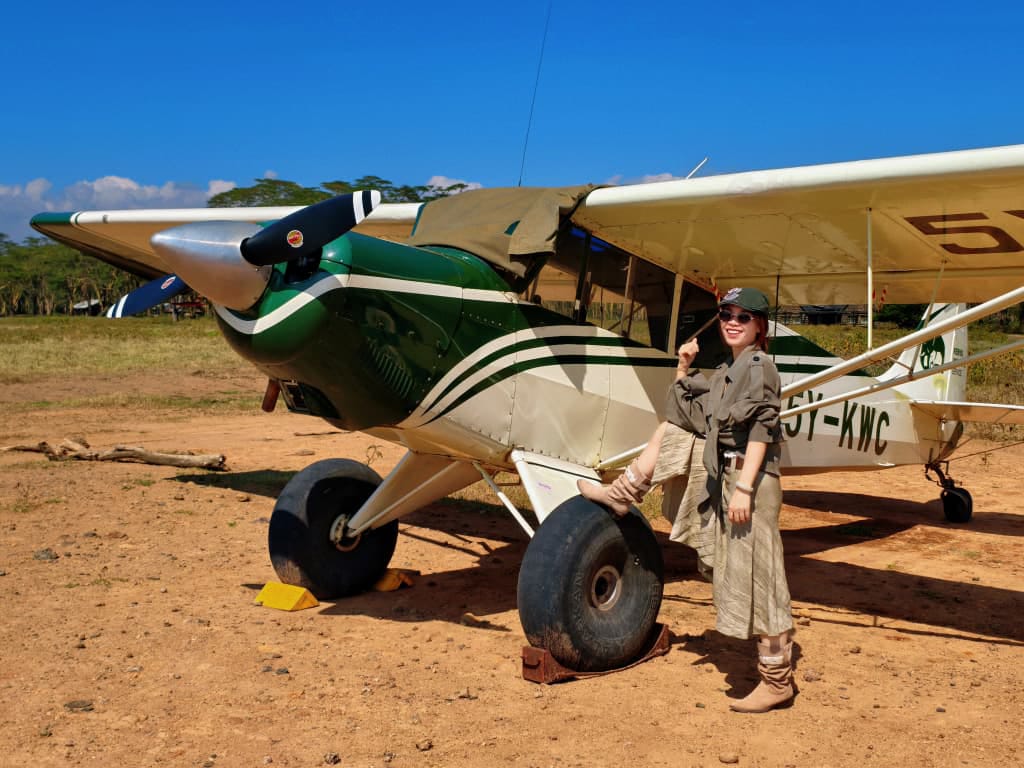
Clothing
A few colour and fabric choices make a real difference to comfort and to what wildlife you see:
- Neutral colours , khaki, olive, brown, beige. Avoid bright colours and pure white, which stand out
- Avoid dark blue and black , in parts of East Africa these colours attract tsetse flies
- Long-sleeved shirts and long trousers , for sun protection by day and insect protection at dusk
- A warm layer , early morning game drives in an open-sided vehicle are cold even when days are warm
- A light rain jacket , especially during the November–December or March–May rains
- Comfortable closed shoes , for walking safaris, camp grounds, and bush landings if flying
- A swimsuit , many camps have pools, and it's essential for any Bush & Beach extension
- A hat and sunglasses , the equatorial sun is strong even on overcast days
Gear
Most camps offer laundry service, so you can pack lighter than you'd expect for a week-long trip:
- Binoculars , one pair per person, not shared; the single biggest difference-maker for distant sightings
- Camera and telephoto lens
- Spare batteries and memory cards , charging points aren't always available during full-day game drives
- A power bank for phones and cameras between camp charging opportunities
- A dry bag or dust cover for electronics , Kenya's dry-season roads are dusty
- A basic headlamp or torch , most camps are unfenced, and paths are often dark after dinner
Health & Toiletries
Non-negotiables for staying comfortable and protected in the bush:
- Sunscreen (high SPF) and insect repellent (DEET-based) , even on cloudy days
- Personal medications in original packaging, plus a basic first-aid kit
- Hand sanitizer and wet wipes for long game drive days
- Any prescribed antimalarials, discussed with your doctor before travel
Documents
Keep these together, with digital backups where possible:
- Passport with at least 6 months' validity remaining
- Kenya visa (usually applied for online in advance)
- Travel insurance details, printed or saved offline
- Yellow fever certificate, if arriving from or transiting a country with yellow fever risk
- A copy of your itinerary and emergency contacts, both digital and printed
Luggage
Safari transport has its own constraints, different from a typical flight:
- Soft-sided duffel bags, not hard-shell suitcases , light aircraft transfers and safari vehicles have limited storage
- Weight limits , internal flights within Kenya often cap luggage at 15kg per person, including hand luggage
- A day pack for camera gear, water, and layers you'll want easy access to during game drives
What to Leave Behind
A few items do more harm than good on safari:
- Camouflage clothing , reserved for military use in Kenya and best avoided by tourists
- Hard-shell suitcases , impractical for light-aircraft transfers and awkward in vehicle storage
- Excess valuables , most camps have safes, but it's simplest to travel light on jewellery
- Overpacked formalwear , safari camps are relaxed; smart-casual covers virtually every dinner
A Simple Rule of Thumb
If you're unsure whether to pack something, ask: does this help me see wildlife, stay comfortable in the vehicle, or stay protected from sun and insects? If the answer is no, it probably isn't essential for the bush. Every Loise Adventures itinerary includes a detailed, trip-specific packing note tailored to your exact route, season, and accommodation style.
Continue reading