
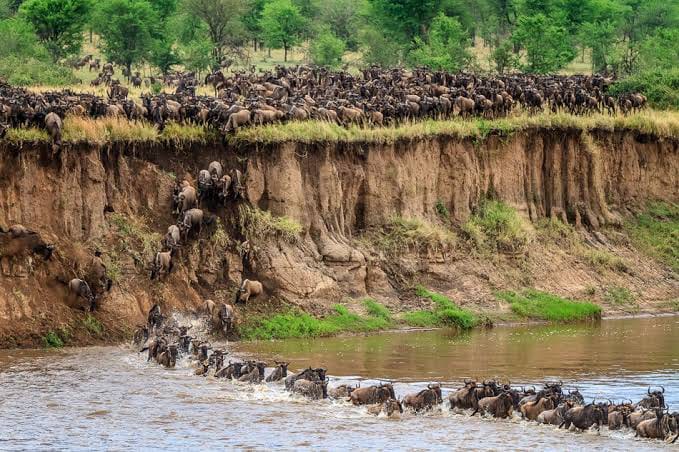
Nature's Most Dramatic Wildlife Event
If there's one moment that defines the Great Migration, it's the Mara River crossing. A herd may gather at the riverbank for hours, or even days, without a single animal crossing. Then, without warning, one wildebeest takes the leap, and within seconds thousands follow , erupting into a thunder of hooves, splashing water, and dust.
Why Do Wildebeest Risk Crossing the River?
They aren't crossing because they want to , they're following fresh grazing and water. If they remain where the grass is exhausted, starvation becomes a greater threat than crocodiles. Some individuals won't survive, but the migration continues; it's one of the most powerful examples of natural selection in the wild.
The Crocodiles of the Mara River
The Mara River is home to some of Africa's largest Nile crocodiles, many over five meters long. Unlike predators that chase prey, crocodiles rely on patience, remaining almost motionless for months before bursting into explosive speed. Despite the drama, crocodiles capture only a small percentage of the animals that cross.
The Challenges Go Beyond Crocodiles
Surprisingly, crocodiles aren't always the biggest danger.
- Strong river currents can sweep animals downstream before they reach the far bank
- Steep riverbanks force exhausted wildebeest to climb slippery, muddy slopes
- Confusion within the herd creates chaos when leading animals panic and turn back
- Predators wait on land near crossing points for exhausted or separated animals
River Crossings Cannot Be Scheduled
No ethical safari company can guarantee a Mara River crossing , be cautious of anyone who promises one on a specific day. Experienced guides improve your chances by monitoring herd movements and rainfall patterns, but patience is essential; some visitors wait hours, others see two or three crossings in a single day.
Tips for Increasing Your Chances
A few things genuinely help:
- Spend at least three full days in the Maasai Mara during migration season
- Travel during peak months (typically July–October)
- Stay inside or close to the reserve
- Be patient , the best sightings happen after hours of waiting
- Bring binoculars and a telephoto lens
Continue reading