
January to March , Calving Season in Southern Serengeti
The migration begins the year in the nutrient-rich grasslands of southern Serengeti and Tanzania's Ngorongoro Conservation Area. Between late January and early March, more than 500,000 wildebeest calves are born within weeks , within minutes of birth they can stand and follow their mothers. Lions, cheetahs, leopards, hyenas, and jackals take advantage of the abundance of vulnerable prey, making this one of the most active predator seasons of the year.
April to May , The Long Rains and the Journey North
The herds gradually leave the calving grounds and move northwest through central Serengeti. This period is often overlooked because travelers avoid the rains, but it offers real advantages.
- Fewer safari vehicles
- Beautiful green landscapes
- Dramatic skies for photography
- Lower accommodation rates
- Active wildlife throughout the ecosystem
June , The Great Journey Begins
The migration gathers momentum, moving north toward the Grumeti River, where large Nile crocodiles wait beneath the surface. June is one of the best months for excellent wildlife viewing without the peak-season crowds of July and August.
July to October , Kenya's Masai Mara Comes Alive
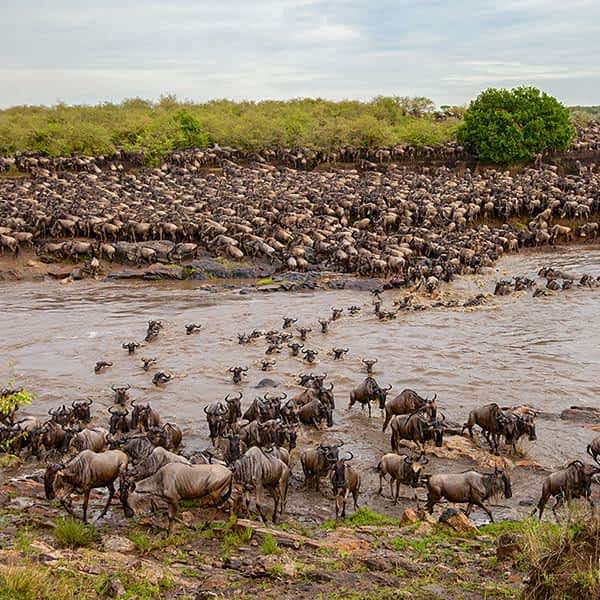
Large sections of the migration reach Kenya's Masai Mara National Reserve, offering the highest chances of witnessing the iconic Mara River crossings , though exact timing shifts year to year with rainfall. Crossings can't be scheduled, but the Mara offers exceptional sightings beyond them too: lions hunting around the herds, cheetahs on open plains, leopards in riverine forests, and countless elephants, giraffes, and buffalo.
November to December , The Return South
As the short rains begin, the migration gradually leaves Kenya and journeys back into northern Serengeti before continuing south toward the calving grounds. Visitor numbers decline, but this period offers peaceful game drives, lush scenery, and excellent wildlife viewing.
Is There Really a "Best" Time?
It depends entirely on what you hope to experience.
- Dramatic Mara River crossings → July–October
- Photography with fewer vehicles and greener landscapes → April, May, November
- Newborn wildlife and predator behavior → January–March
Continue reading