
Lions , Kings of the Maasai Mara
The Maasai Mara supports one of Africa's healthiest lion populations. Large prides establish territories near migration routes and river crossings, relying on strength, teamwork, and patience rather than speed. Lions rest nearly twenty hours a day, since every hunt requires enormous energy and success is never guaranteed.
Cheetahs , Masters of Speed
The Mara's open grasslands give cheetahs room to accelerate. A cheetah can go from 0 to 100 km/h in seconds , the fastest land animal on Earth , but these bursts are brief; if the prey escapes the initial sprint, the cheetah usually abandons the chase.
Leopards , The Invisible Hunters
Leopards are masters of secrecy, preferring riverine forests and dense vegetation. Solitary and largely nocturnal, one of their most remarkable behaviors is dragging prey high into trees to protect it from lions and hyenas , because they're so elusive, every sighting feels special.
Spotted Hyenas , Nature's Intelligent Survivors
Widely misunderstood as scavengers, hyenas are highly intelligent, social, and remarkably successful hunters , much of what they eat, they've hunted themselves. Living in complex clans, they patrol areas where herds gather, searching for weak or separated animals.
Nile Crocodiles & African Wild Dogs
Some Mara River crocodiles are estimated to be several decades old, relying almost entirely on surprise rather than pursuit. African wild dogs, among Africa's most endangered large carnivores, hunt with remarkable teamwork and have one of the highest hunting success rates of any large predator , a sighting is considered extremely fortunate.
The Prey Are Far From Defenseless
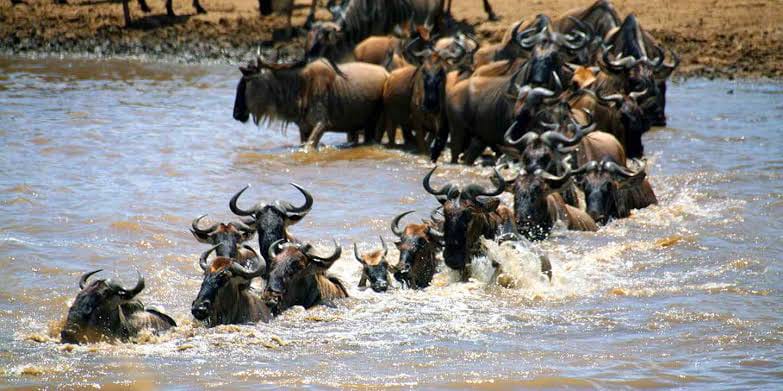
Wildebeest rely on numbers , with over a million moving together, predators struggle to isolate individuals. Zebras have exceptional eyesight and hearing, and their stripes confuse predators mid-chase. Gazelles depend on agility; their famous high jumps, known as "stotting," are believed to signal to predators that they're too healthy to bother chasing.
Continue reading